

< Back to Blog
Supporting the Load: How Proper Equipment Stands Prevent Shop Injuries and Structural Failures
June 11, 2026
HD Adjustable Equipment Stands
In mining and construction maintenance environments, few risks are as consistently underestimated as improper load support. When haul trucks, dozers, loaders, and other heavy mobile equipment enter the shop for underbody inspections, track frame repairs, or component change-outs, the focus often shifts immediately to the task at hand—welding, pulling pins, swapping transmissions, or inspecting structural cracks. But every one of those jobs relies on one foundational factor: the stability and integrity of the equipment stands supporting the machine.
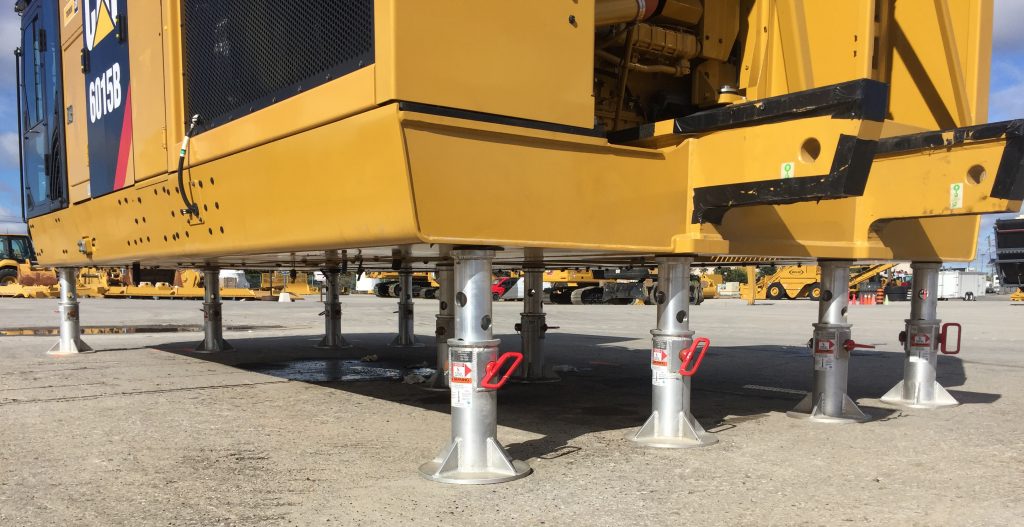
At B&D Manufacturing Ltd., we design and build certified adjustable and fixed-height stands specifically for the demands of mining and construction maintenance. In this blog, we explore why the right stands matter, the hazards they eliminate, and how shops can dramatically reduce risk by choosing engineered support solutions rather than improvised or uncertified ones.
Why Proper Load Support Matters
Modern mining and construction equipment is massive. A single corner load on a 240–400 ton haul truck can exceed what entire shop hoists or jacks are rated for. When a machine must be lifted for undercarriage work—such as changing walking beams, repairing struts, or accessing belly pans—the stability of the stand system becomes the primary barrier between a safe repair and a catastrophic event.
Improvised solutions like wooden cribbing, mismatched stands, or uncertified steel blocks are still common in some shops. While they may feel solid, they lack the engineering, load testing, and factor-of-safety validation that purpose-built equipment stands provide. Under dynamic shop conditions—vibration from tools, shifting loads, uneven concrete, or unexpected environmental stress—these improvised supports can fail suddenly and without warning.
Certified equipment stands, by contrast, are engineered, tested, and rated to carry static and dynamic loads with predictable performance.
The Hidden Hazards During Underbody Maintenance
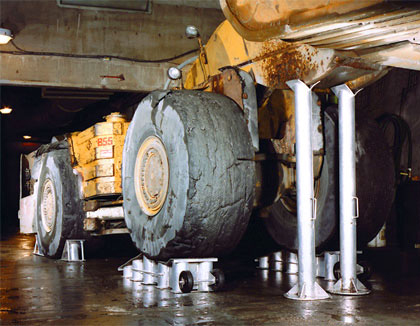
Underbody access—belly pans, articulation joints, fuel tanks, and center frames—requires technicians to work directly beneath multi-million-dollar machines weighing several hundred tons. These tasks present extreme risk:
- Load shifting when the machine is partially disassembled
- Vibration and impact from pneumatic and hydraulic tools
- Uneven weight distribution after removing a major component (e.g., a transmission or final drive)
- Changing center of gravity when lifting one side of the machine
Using adjustable or fixed-height stands designed for these applications ensures the load remains stable even as the machine’s weight distribution changes. Adjustable stands provide fine height control, allowing a machine to be levelled or lifted precisely, while fixed-height stands offer robust simplicity and maximum rigidity where adjustability is not needed.
Track Frame Work: A High-Load, High-Risk Scenario
Track frames on dozers, shovels, and large excavators are deceptively dangerous areas to work around. When technicians remove idlers, rollers, or the frame itself, the supporting structure of the machine becomes compromised. Without proper stands, the entire unit can:
- Shift unpredictably
- Drop when tension is released
- Lean or roll when a major component is removed
B&D’s heavy-duty adjustable stands are equipped with wide bases, engineered load ratings, and locking pins that prevent collapse even under lateral forces. For track frame work in particular, adjustable stands eliminate the guesswork—allowing technicians to raise, align, and support frames with millimetre accuracy while ensuring that the load path is fully controlled.
Component Swaps: When Dynamic Loads Are at Their Worst
Component swaps—such as transmissions, rear axles, engine modules, or final drives—are among the most dangerous maintenance tasks. The machine’s weight distribution can shift suddenly when:
- A module is removed
- A lifting device bumps the equipment
- A component binds and then releases
- Hydraulic pressure bleeds off
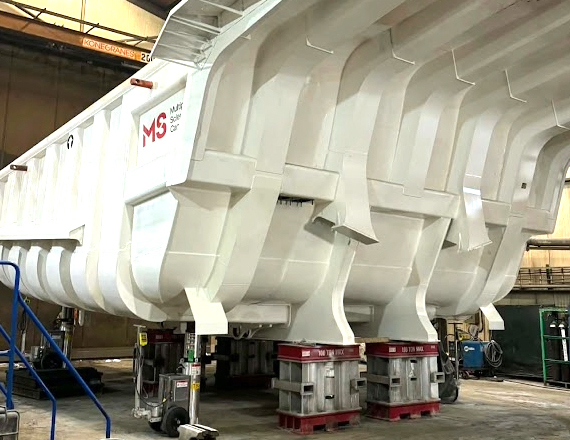
Fixed-height stands are ideal for major component swaps because they provide rigid, unwavering support. Once the machine is in position, they eliminate the risk of a stand “walking,” leaning, or compressing under uneven load.
Using B&D certified stands during component swaps ensures the machine remains supported throughout the entire procedure, regardless of unexpected movements or changing load angles.
How Certified Stands Eliminate Shop Hazards
The primary purpose of a certified stand is simple: remove uncertainty.
Engineered stands eliminate hazards by providing:
- Predictable Load Capacity
Every B&D stand is rated for a specific load with a defined safety factor—no guessing, no assumptions.
- Full Structural Engineering
Certified stands undergo analysis for bending, compression, buckling, weld integrity, and multi-directional stability.
- Wide, Anti-Tip Footprints
Designed to resist lateral forces commonly encountered during heavy maintenance.
- Compatibility with Jacks and Lifting Systems
Our stands work seamlessly with hydraulic jacks, torque tooling, pit supports, and lifting beams.
- Height-adjustment Precision
Adjustable stands allow fine tuning for tasks requiring alignment, leveling, or staged lifts.
- Reduced Risk of Human Error
Clear labeling, simple locking mechanisms, and consistent design reduce misuse.
What Proper Stands Mean for Your Shop
Investing in engineered support stands delivers tangible operational value:
- Fewer injuries and near-misses
- Less machine damage
- Higher technician confidence
- Compliance with safety regulations
- Reduced downtime due to avoidable failures
In mining and construction maintenance, safety and efficiency are inseparable. When technicians know the machine is properly supported, they can perform at their best without hesitation or compromise.
Final Thoughts
In the heavy-equipment maintenance world, supporting the load is more than a step in the process—it is the foundation of safe, efficient, and professional work. Adjustable and fixed-height equipment stands are not accessories; they are essential infrastructure. When your shop relies on certified stands engineered for mining and construction loads, you eliminate the biggest uncontrolled variable in underbody work, track frame maintenance, and component swaps.
At B&D Manufacturing Ltd., we build stands that keep your people safe, your equipment stable, and your operation moving. If you’re ready to upgrade your shop’s load support strategy, our team can help you choose the right stand systems for your fleet and maintenance needs.
