


< Back to Blog
Sustainability in Mining Maintenance: Refurbish, Reuse, Repeat
April 30, 2026
Rebuild, Don’t Replace — A Win for the Planet and Your Bottom Line
In today’s mining sector, sustainability is no longer just a corporate buzzword — it’s a competitive advantage. As mines strive to reduce environmental impact while maximizing productivity, mobile equipment maintenance departments are uniquely positioned to drive meaningful change. Every component rebuilt, every piece of equipment kept in service longer, and every kilogram of waste avoided contributes to a greener, more cost-effective operation.
At B&D Manufacturing, our mission has long been to support maintenance teams with innovative handling and access solutions that make rebuilds safer, faster, and more economical. The path to a more sustainable mining industry doesn’t start with massive infrastructure shifts — it starts with refurbish, reuse, repeat.
Why Refurbishment Matters More Than Ever
Mining equipment is built tough, but tough isn’t invincible. Engines, transmissions, wheel groups, suspensions, and hydraulic systems all face relentless wear. Traditionally, many of these components were simply swapped out for new units. Today, economic pressure and ESG commitments are driving a shift: mines are rebuilding components more frequently, and keeping assets in service longer.
Here’s why refurbishment is a sustainability game-changer:
- Lower environmental footprint: Manufacturing new components consumes massive amounts of energy and raw materials — steel, aluminum, rubber, and rare metals. A rebuild typically requires 5–20% of the energy of producing a new part.
- Significant cost savings: Rebuilding major assemblies often costs a fraction of replacement, especially when in-house capabilities and proper handling tools are available.
- Reduced waste: Every rebuild helps avoid scrap metal accumulation and reduces hazardous waste associated with disposal.
- Extended equipment life: Reusing high-value components reduces the need for new capital purchases and stabilizes maintenance budgets.
The rebuild-first philosophy is not only environmentally responsible — it’s financially strategic.
B&D Handling Solutions: Enabling Safer, Cleaner, More Efficient Rebuilds
Rebuilding major mobile equipment components isn’t just a workshop task — it’s a complex process requiring specialized handling, tooling, and access systems to keep technicians safe and work flowing efficiently.
1- Purpose-Built Component Handling
B&D’s line of handling equipment — from cylinder benches and transmission stands to wheel group handlers and suspension tooling — is designed to reduce manual intervention, prevent damage, and streamline the rebuild process.
These tools support sustainability by:
- Reducing component damage during disassembly and transport
- Lowering the number of scrapped parts due to mishandling
- Increasing rebuild throughput, making refurbishment a faster, more reliable option
- Improving safety, which reduces downtime and operational disruptions
2- Modular and Reusable Designs
Many B&D systems are modular, meaning mines can reconfigure them for different equipment models or tasks over time. This eliminates the need to purchase one-off pieces of tooling for each machine generation — reducing both costs and material waste.
3- Built to Last
Longevity is a key pillar of sustainability. B&D invests in heavy-duty construction and high-grade materials, ensuring our stands, benches, and handling equipment remain in service for years — often outlasting multiple machine life cycles.
Aluminum Access Platforms: Small Change, Big Sustainability Impact
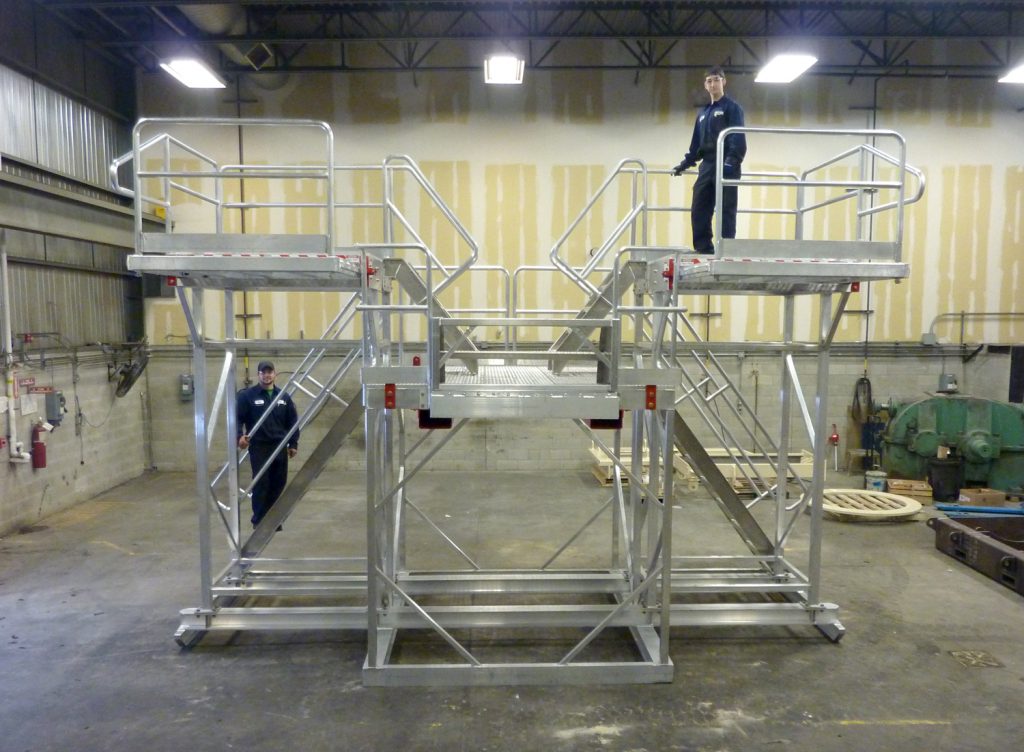
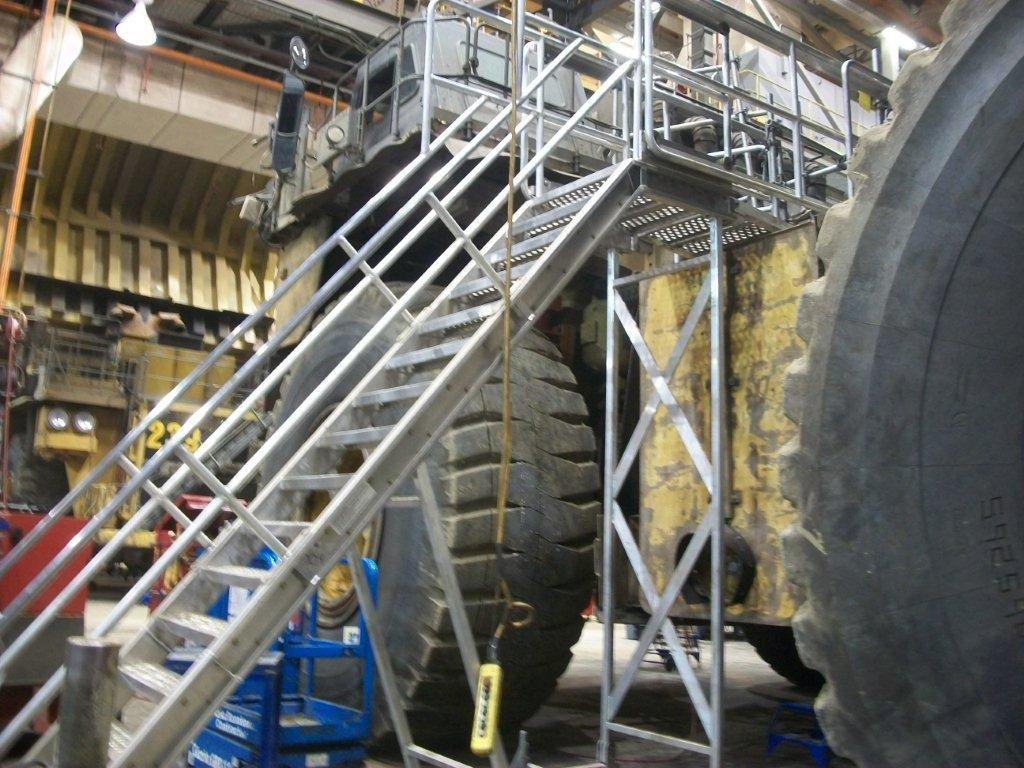
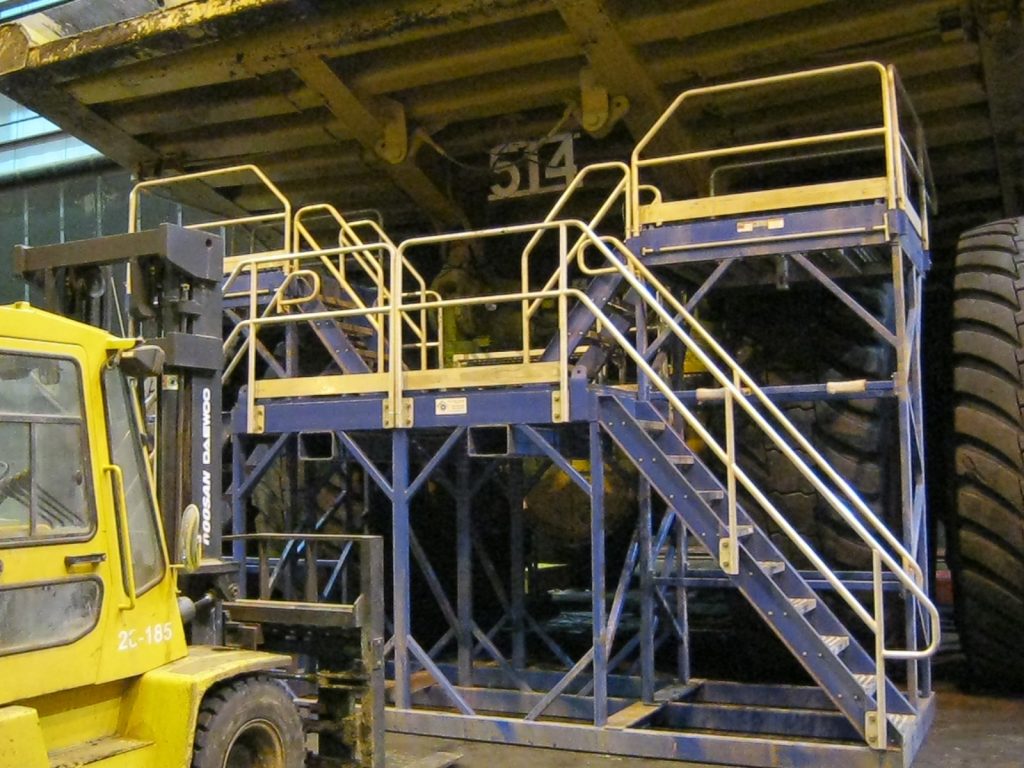
When it comes to maintenance sustainability, access platforms may not be the first thing that comes to mind — but material choice plays a major role in long-term environmental impact.
Why Aluminum?
B&D’s aluminum access platforms offer clear sustainability advantages over traditional steel structures:
- Lightweight = Reduced Energy Use
Aluminum platforms are easier to move, adjust, and reconfigure, reducing the energy and equipment needed for installation and daily use. - Corrosion Resistance
Unlike steel, aluminum doesn’t require frequent blasting, repainting, or coating — processes that consume chemicals and generate waste. - Highly Recyclable
Aluminum can be recycled repeatedly with minimal degradation, using only around 5% of the energy required to produce new aluminum. - Longer Service Life
With proper care, aluminum platforms can remain fully functional for decades, reducing replacement cycles and the environmental burden of new material production.
For mines striving toward greener operations, specifying aluminum access infrastructure introduces efficiency and sustainability benefits that accumulate year after year.
Sustainable Maintenance: A Strategic Investment, Not a Trade-Off
Adopting a “refurbish, reuse, repeat” mindset does more than reduce waste — it transforms mobile maintenance into a sustainability engine for the entire operation. Mines that prioritize rebuilds, optimize component handling, and invest in long-life access infrastructure experience:
- Lower total cost of ownership
- Smaller environmental footprint
- Improved workforce safety
- Reduced equipment downtime
- Greater resilience against supply chain volatility
As global expectations around ESG performance rise, maintenance departments that embrace rebuild-centric strategies become critical contributors to corporate sustainability goals.
How B&D Supports Your Sustainability Journey
For over 40 years, B&D Manufacturing has partnered with mining operations to make maintenance safer, more efficient, and more environmentally responsible. Whether you’re looking to enhance rebuild capabilities with better handling solutions or reduce long-term waste with aluminum access platforms, we provide the tools and expertise to help you achieve your sustainability targets — without compromising productivity.
