

< Back to Blog
Aluminum Heavy Duty Wheel Chocks vs. Rubber/Polyurethane: A Comprehensive Industrial Analysis for 2025
November 25, 2025
In modern industrial environments—particularly mining, oil & gas, and heavy machinery operations—wheel chocks are no longer seen as simple safety devices. By 2025, they are recognized as critical components for operational efficiency, safety compliance, and long-term sustainability. Choosing between aluminum heavy-duty wheel chocks and rubber/polyurethane alternatives has become a strategic decision that directly impacts safety protocols, cost control, and environmental responsibility.
Executive Summary
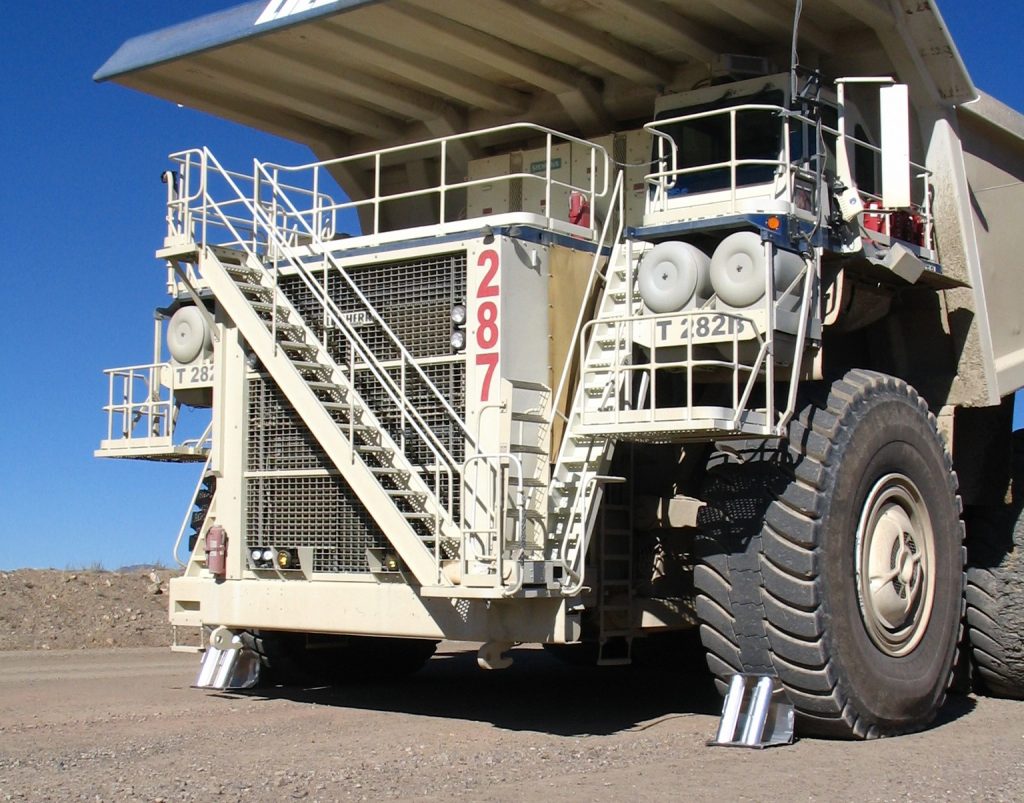
Aluminum excels in extreme-duty applications where structural integrity under massive loads is non-negotiable. Meanwhile, rubber and polyurethane (PU) chocks dominate in environments that prioritize ergonomics, tire safety, and chemical resistance. Both material categories meet regulatory safety standards, but their value depends on the operational context and lifecycle considerations.
Aluminum Heavy-Duty Wheel Chocks
Aluminum represents the pinnacle of strength and durability. These chocks maintain structural integrity in temperature extremes, from Arctic mining to desert oil fields. Their resistance to deformation makes them indispensable for massive haul trucks and other heavy machinery where failure is not an option.
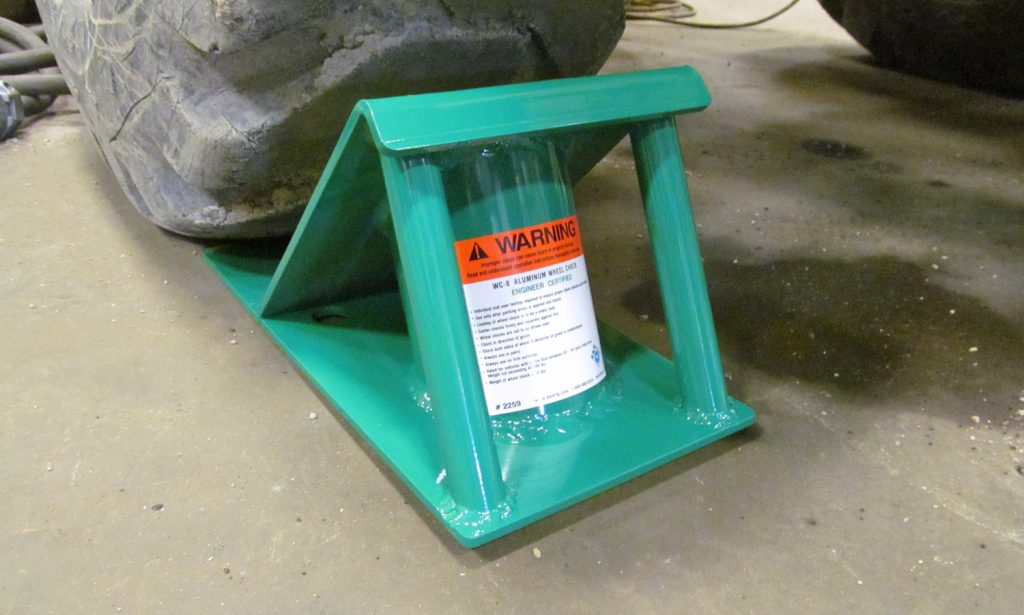
Canadian leader B & D Manufacturing has advanced aluminum chock design by eliminating sharp edges, addressing concerns over tire damage. Their investment in co-robotic welding centers has scaled production, lowered costs, and ensured consistent quality, reinforcing aluminum’s global standing.
While weight and electrical conductivity remain considerations, aluminum’s superior longevity and recyclability often outweigh these drawbacks. End-of-life aluminum can be recycled indefinitely with just 5% of the energy needed for primary production—making it one of the most sustainable industrial materials available.
Rubber and Polyurethane Wheel Chocks
Rubber and PU chocks thrive where versatility, safety, and ease of use are critical. PU versions are up to 50% lighterthan rubber, improving worker ergonomics in applications requiring frequent repositioning. Their non-conductive naturemakes them safer in electrical environments, while their softer composition prevents tire damage—reducing maintenance costs.
Modern polyurethane also delivers superior weather and chemical resistance, withstanding fuels, lubricants, and extreme temperatures. This durability has made PU particularly well-suited for refinery, drilling, and mobile equipment operations. Suppliers like National Plastics & Rubber have expanded lightweight offerings for demanding mining environments.
The main drawback remains limited recycling infrastructure. While emerging chemical recycling technologies show promise, rubber and PU end-of-life pathways are less advanced than aluminum’s.
Industry Applications
- Mining: Both aluminum and PU succeed, though aluminum dominates for ultra-heavy haul trucks and arctic operations, while PU is favored for more frequent handling needs.
- Oil & Gas: Polyurethane shines due to its chemical resistance and non-conductive safety advantages, while aluminum requires added safety protocols around electrical risks.
Economic and Safety Considerations
- Initial Investment: Aluminum requires higher upfront cost but delivers unmatched service life in extreme-duty contexts. PU and rubber offer more cost-effective entry points for general industrial use.
- Operational Costs: PU’s lighter weight reduces worker fatigue, while aluminum’s durability minimizes replacement cycles. Both comply with MSHA, OSHA, SAE, NFPA, and DOT standards when properly manufactured.
- Visibility & Safety: PU often includes high-visibility coloring, reducing risks of forgotten or misplaced chocks during operations.
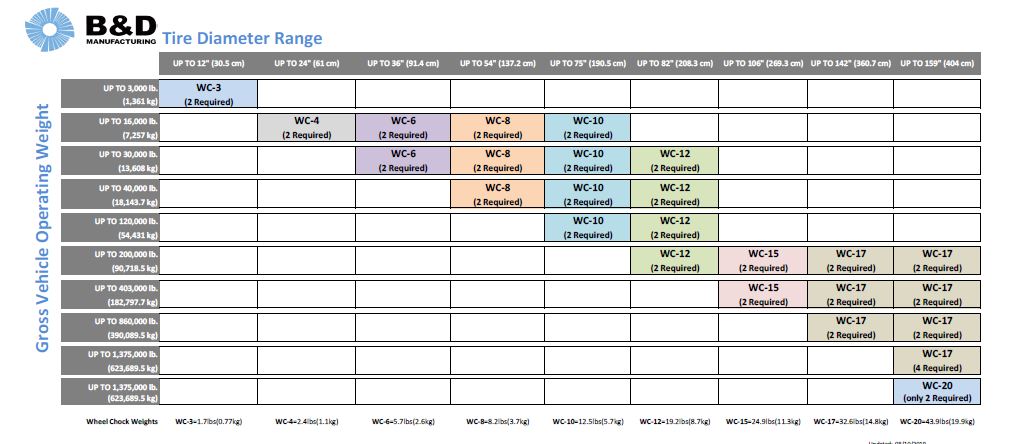
Wheel Chock Selection Chart — Tire Diameter and Vehicle Weight Range
Market Trends for 2025
- Smart wheel chocks are emerging, with sensors to monitor placement and load conditions.
- Hybrid materials seek to combine metallic durability with polymer flexibility.
- Lifecycle assessments are increasingly shaping procurement, with sustainability performance weighed alongside safety.
- Supply chain resilience favors aluminum due to global recycling networks, while PU depends more heavily on petroleum feedstocks.
Recommendations
- Extreme-duty, high-load applications: Aluminum chocks remain the best option.
- Standard industrial operations: Polyurethane offers the best balance of cost, ergonomics, and safety.
- Environmentally focused operations: Aluminum is the most sustainable choice due to its recyclability.
Conclusion
By 2025, the choice between aluminum and rubber/polyurethane wheel chocks is less about “better” versus “worse” and more about matching material to application. Aluminum leads in extreme load-bearing and sustainability, while polyurethane dominates in ergonomics, safety, and chemical resistance.
The future of industrial wheel chocks will be defined by innovation, recycling advances, and smart technology integration—ensuring that whichever material companies choose, safety and efficiency remain uncompromised.
Explore more B&D Heavy-Duty Safety Products designed to enhance reliability, sustainability, and compliance across mining and industrial operations.
